
Hiran Minar
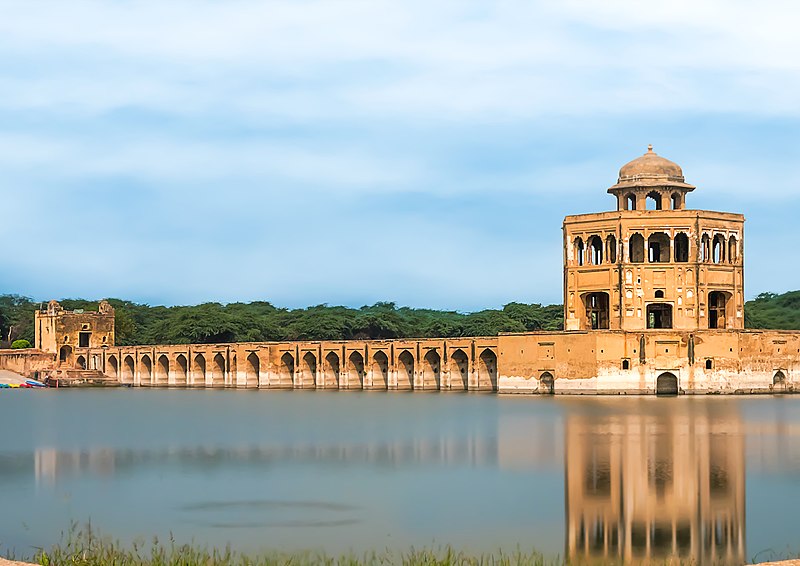 Sheikhupura, on the outskirts of Lahore, derived its name from the nickname of prince Jahangir. It was one of Jahangir's princely dominions during his father Akbar's reign. Just north of Sheikhupura town lies a hunting complex known as the Hiran Minar. Hunting grounds were an important part of the physical environment of Mughal Emperors, and the Hiran Minar is one of the best known of such sites. Its structure consists of a large, almost square water tank with an octagonal pavilion in its center, built during the reign of Shah Jahan, a causeway with its own gateway connects the pavilion with the mainland and a 100-foot-high minar, or minaret. At the center of each side of the tank, a brick ramp slopes down to the water, providing access for royal animals and wild game. The minar itself was built by Emperor Jahangir in 1606 to honor the memory of a pet hunting antelope named Mansraj. Besides the antelope's grave, there is a distinctive water collection system in the Minar. At each corner of the tank (approximately 750 by 895 feet in size), is a small, square building and a subsurface water collection system.
Sheikhupura Fort
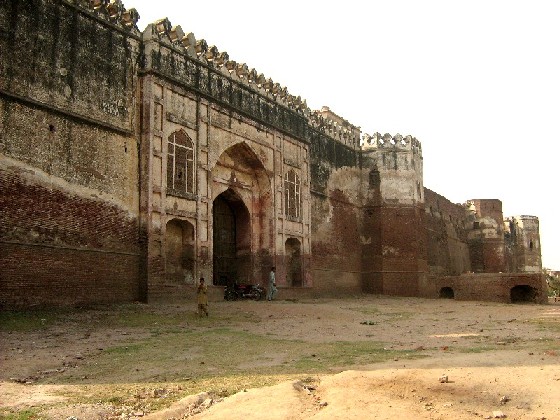 The five-storey Sheikhupura Fort was built by Emperor Jahangir in 1619 AD. The Fort was constructed by Moein Khan but after his death it was completed under the supervision of Irdat Khan. Rs. 1.5 lac were spent on the construction of this building. This fort is situated in the southwest of the old city of Sheikhupura. The front door is on the west while in the east, there is the shrine of Shah Qaland. There are holes and trelliswork (jallian) on the walls for the sunlight. The front door of the Fort is about 7 inches wide and is very strong. There are about 4 enclosures on the south and north walls. Lime is the basic material which is used in its construction. It is said that during the Sikh reign, Malayan, who was the wife of Maharajah Ranjeet Singh, built the second storey of Fort. Arbail Singh was defeated here by Maharajah Ranjeet Singh and he took possession of all his property. Arbail Singh was behind many of the robbers and dacoit and the people from the city requested Maharajah to help them against Arbail Singh.
Shrine of Syed Waris Ali Shah
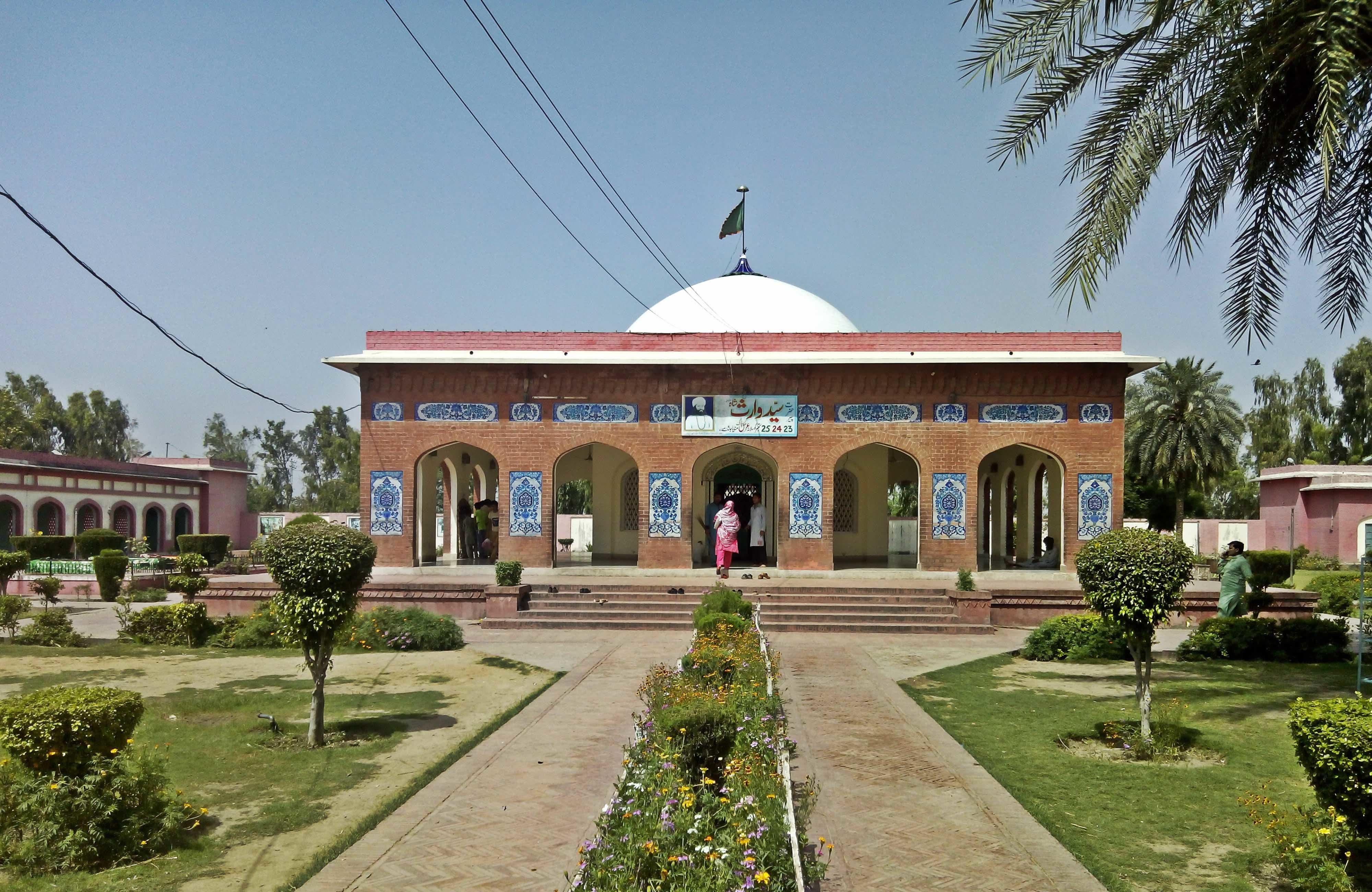 A few kilometers beyond Hiran Minar is the historical village of Jandiala Sher Khan, the birthplace of poet Waris Shah, the author of the Punjabi Classic 'Heer'. Besides the newly constructed mausoleum of the poet, there are a few historical buildings worth seeing in the village. Waris Shah was born in Jandiala Sher Khan in a Syed family. His father’s name was Gul Sher Shah. Waris Shah’s specialty was the poem Heer. Many poets have written it in the Mughals reign but he became the legend after rewriting Heer in Punjabi in 1766. The motive behind this poem was his love for a beautiful Hindu woman. He died in 1798. Shrine of Waris Shah is located in village Jandiala Sher Khan at a distance of 15 kilometers form Sheikhupura at Kasha roadside. Adjacent to this Shrine is the tank whose water is considered sacred by some classes of the people. An annual festival is held in July to mark the Urs of this Sufi poet and the event is a major attraction in the area that attracts thousands of his devotees.
Sheikhupura Stadium
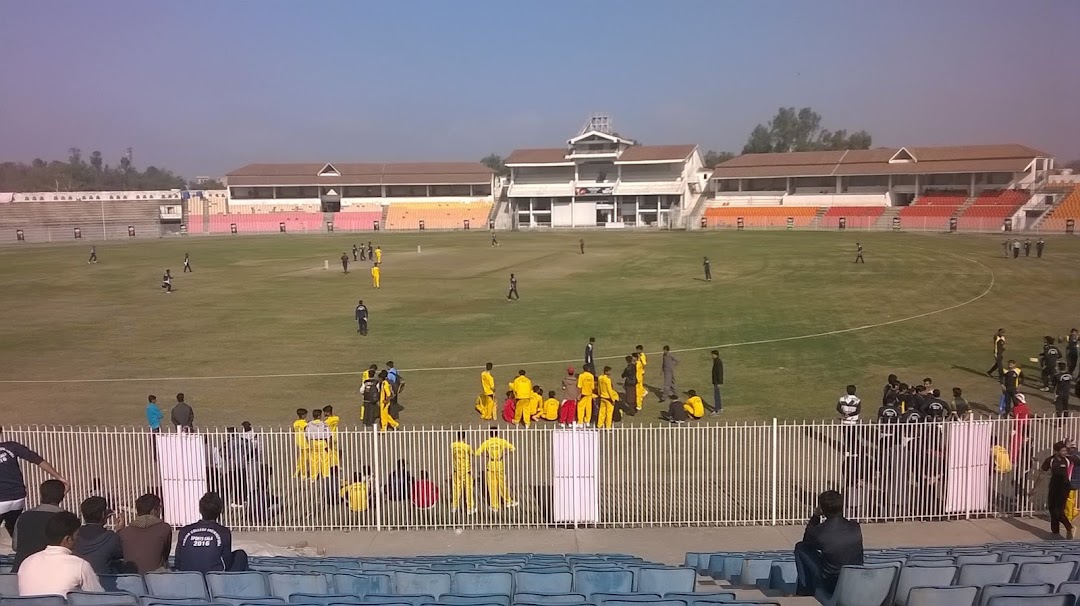 Sheikhupura Stadium is a multi-purpose stadium in the city that hosted international cricket matches previously. The stadium holds 15,000 people and hosted its first test match in 1996, when Pakistan played Zimbabwe. This was followed by another test a year later between Pakistan and South Africa. Sheikhupura Stadium has hosted two one-day internationals so far, both between Pakistan and Zimbabwe.